Watching a cat grow older can be bittersweet. The playful kitten that once raced around the house may eventually prefer longer naps, quieter rooms, and a more predictable routine. As those changes happen, food becomes an important part of keeping your cat comfortable and maintaining a healthy body condition.

But finding the best senior cat food is not as simple as choosing a package that says “senior” on the front.
Older cats can have very different nutritional needs. Some remain healthy and active, while others develop dental problems, lose weight, gain weight, or develop conditions that require a specific veterinary diet. In fact, veterinary sources note that there is no single standardized nutrient profile that is ideal for every senior cat.
So how do you choose the right food?
Let’s break it down.
When Is a Cat Considered a Senior?
Cats do not all age at exactly the same rate, but the Feline Veterinary Medical Association considers cats over 10 years old to be senior. Some cats may show age-related changes earlier or later depending on their individual circumstances.
By the senior years, your cat may become less active, sleep more, or experience changes in appetite and body weight. These changes should not automatically be dismissed as “just aging.” A noticeable change in eating, drinking, weight, behavior, or general health can sometimes point to an underlying medical problem.
That is why choosing food should start with your cat—not simply with the label on the bag.
What Makes the Best Senior Cat Food?

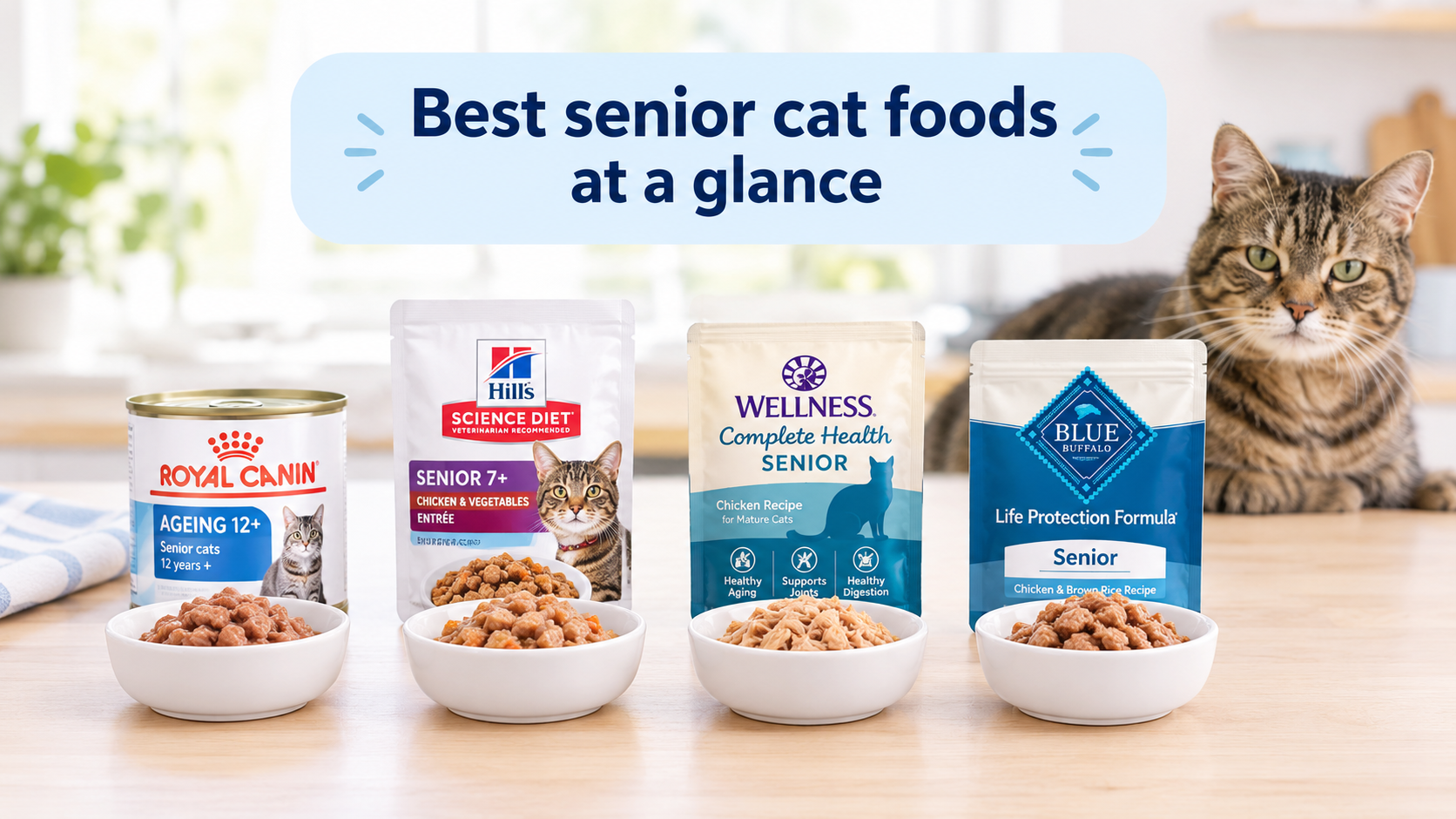
The best food for an older cat should provide complete and balanced nutrition while matching that cat’s individual needs.
Here are some of the most important things to consider.
1. Complete and Balanced Nutrition
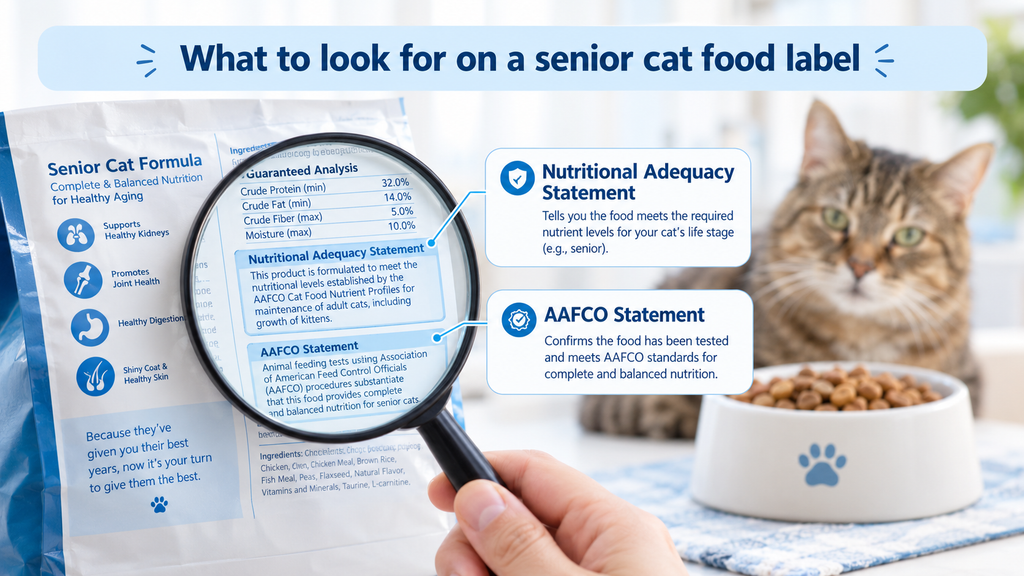
Look for a commercially prepared food with an appropriate nutritional adequacy statement for your cat’s life stage.
Cornell University recommends choosing nutritionally complete and balanced commercial cat food rather than judging a product only by marketing terms or individual ingredients.
A long ingredient list does not automatically mean better nutrition.
2. Appropriate Protein
Protein is especially important because maintaining muscle becomes an important concern as cats age.
However, more protein is not automatically better for every senior cat. A healthy older cat and a cat with diagnosed kidney disease may need very different nutritional approaches. VCA notes that healthy senior cats may benefit from adequate protein, while cats with kidney disease may require a therapeutic diet with modified phosphorus and other nutrients.
If your cat has kidney disease or another chronic condition, ask your veterinarian before making major dietary changes.
3. Enough Calories—but Not Too Many
Some older cats gain weight because they become less active. Others become thinner as they age.
Both situations matter.
Cornell recommends monitoring body condition and working with a veterinarian if an older cat becomes overweight or loses weight. Weight loss in an older cat can have many possible causes, including medical conditions.
Instead of automatically feeding more or less, monitor your cat’s weight and body condition regularly.
4. Good Hydration
Hydration deserves special attention when feeding older cats.
Wet cat food can contain around 70–80% water, while canned foods generally contain at least 75% moisture. Adding wet food to a cat’s diet can therefore increase water intake.
Always provide fresh, clean water as well.
This can be particularly important for older cats because kidney problems become more common with age.
5. A Texture Your Cat Can Actually Eat
A nutritionally excellent food is not useful if your cat refuses to eat it.
Some senior cats develop dental disease or difficulty chewing. Cornell notes that cats with periodontal disease may have trouble with dry food, and softer food or smaller kibble may be easier for some cats to manage.
If your cat suddenly struggles with food, do not simply assume it is being picky. Dental or other health problems may be involved.
Vet-Recommended Senior Cat Food: What Does That Really Mean?
The phrase vet-recommended senior cat food can sound reassuring, but it is important to understand what it actually means.
There is no single food that every veterinarian would recommend for every senior cat.
Veterinarians generally consider factors such as:
- Age
- Body weight
- Muscle condition
- Activity level
- Appetite
- Dental health
- Kidney function
- Digestive health
- Existing medical conditions
- Calorie requirements
VCA specifically explains that senior cats do not have one universal nutrient requirement and that individual cats should be evaluated separately.
So, rather than searching only for a food with a “vet recommended” claim, focus on whether the diet is appropriate for your cat’s actual nutritional and medical needs.
Best Senior Dry Cat Food: Is Kibble Still Okay?
Yes, dry food can be an appropriate option for some senior cats.
The important thing is not simply whether the food is dry. You need to consider its nutritional adequacy, calorie density, portion size, palatability, and whether your cat can comfortably chew it.
Dry food typically contains much less water than canned food. Cornell notes that dry food generally contains around 6–10% water, while canned food has substantially more moisture.
If your senior cat eats mostly dry food, make sure fresh water is always available.
For cats with dental discomfort, a smaller kibble or wet food may be easier to eat.
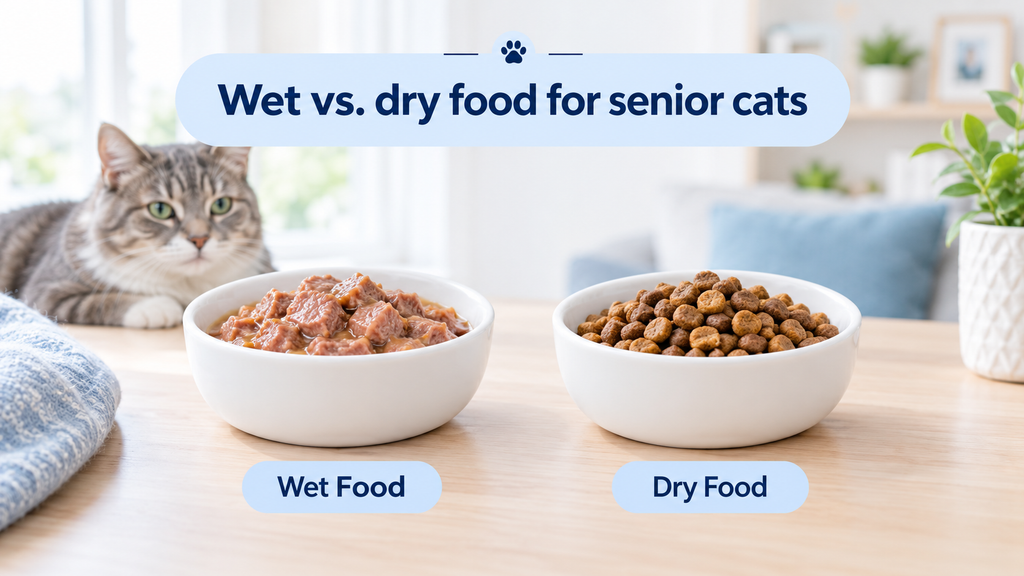
Wet Food vs. Dry Food for Senior Cats

There is no universal rule saying every senior cat must eat wet food.
Both wet and dry foods can fit into a healthy diet when they are nutritionally complete and appropriate for the individual cat.
Wet food may be useful because:
- It provides substantially more moisture.
- Some cats find it easier to eat.
- It can be appealing to cats with reduced appetite.
- It can help increase dietary water intake.
Dry food may be useful because:
- It is convenient to store and serve.
- Some cats prefer its texture.
- Portioning can be straightforward.
- It can be part of a complete and balanced diet.
A combination of wet and dry food can also work well for some cats. Cornell specifically notes that wet food can be fed alongside or instead of dry food.
The right choice ultimately depends on your cat’s health, preferences, and nutritional requirements.
Best Cat Food for Older Cats That Vomit
If you’re searching for the best cat food for older cats that vomit, be careful about assuming the problem is simply the food.
Occasional vomiting can happen in cats, but frequent vomiting deserves veterinary attention.
Cornell recommends veterinary evaluation for cats that vomit more frequently than once a week or that show other concerning signs such as weakness, reduced appetite, blood in vomit, abnormal thirst or urination, or diarrhea.
Vomiting can have many causes, including gastrointestinal disease, parasites, foreign objects, kidney disease, diabetes, hyperthyroidism, and other medical conditions.
Therefore, changing food repeatedly without investigating the cause may delay appropriate treatment.
If your older cat vomits regularly, speak with a veterinarian before choosing a special diet.
What Ingredients Should You Look For?
Instead of looking for one magical ingredient, look at the complete nutritional profile.
A good senior cat food should provide appropriate amounts of:
- Animal-based protein
- Fat
- Essential amino acids
- Vitamins
- Minerals
- Essential fatty acids
- Appropriate calories
Cats are obligate carnivores and require nutrients that are naturally found in animal products. However, Cornell emphasizes that a balanced diet—not simply a list of individual ingredients—is what matters.
Reading the nutrition label and nutritional adequacy statement can tell you more than marketing words such as “premium,” “natural,” or “holistic.”
Does Senior Cat Food Really Make a Difference?

It can—but the answer depends on the individual cat.
A senior-labeled food is not automatically better than every adult cat food.
VCA explains that there are no established universal nutrient requirements specifically for senior cats. Nutritional needs can change as an individual cat ages, and a healthy senior cat may have different needs from a cat with kidney disease or another condition.
For that reason, the most useful question is not:
“Is this food labeled senior?”
Instead ask:
“Does this food provide the right nutrition for my cat’s age, body condition, health, and lifestyle?”
That is a much better starting point.
What Are the Five Cat Foods to Avoid?
There isn’t a universal list of five specific commercial brands that every cat owner should avoid.
Instead, be cautious about feeding:
1. Incomplete or Unbalanced Foods as the Main Diet
Some specialty foods and treats are not designed to provide complete nutrition. Check the nutritional adequacy statement before making a product your cat’s primary diet.
2. Expired or Poorly Stored Food
Old food can lose quality, and fats can become rancid. Store dry food properly and check expiration dates.
3. Excessive Treats
Treats should not replace balanced meals. Cornell recommends keeping treats to roughly 10–15% of a cat’s daily calorie intake.
4. Raw Diets Without Professional Guidance
Cornell notes that raw diets can carry bacterial, viral, and parasite risks and that clear health benefits have not been established.
5. Human Foods That Are Unsafe for Cats
Never assume that food safe for people is automatically safe for cats. Some human foods can be toxic or dangerous.
When in doubt, check with your veterinarian.
How Much Should a Senior Cat Eat?
There is no single portion size that works for every senior cat.
Calories depend on body size, activity level, metabolism, body condition, and health status.
Portion feeding can be helpful because it allows you to monitor how much your cat actually eats. VCA recommends dividing the daily amount into multiple meals when appropriate, and Cornell notes that feeding requirements can vary considerably between individual cats.
If your cat suddenly eats much more or much less than usual, pay attention.
A persistent appetite change can be a reason to contact your veterinarian.
How to Change Your Senior Cat’s Food
Cats can be surprisingly resistant to sudden dietary changes.
Instead of switching foods overnight, introduce the new food gradually unless your veterinarian tells you otherwise.
A simple approach is to mix increasing amounts of the new food with the old food over several days while monitoring:
- Appetite
- Stool quality
- Vomiting
- Energy level
- Weight
If your cat refuses food or develops significant digestive symptoms, contact your veterinarian.
What Is the Best Food for Ageing Cats?
The best food for ageing cats is one that provides complete and balanced nutrition while fitting the cat’s individual health requirements.
For a healthy senior cat, this may be a quality maintenance diet that provides appropriate protein, calories, fat, vitamins, minerals, and moisture.
For a cat with kidney disease, diabetes, dental disease, obesity, or another condition, the appropriate diet may be very different.
That is why there is no single “best” food for every aging cat.
When Should You Talk to a Veterinarian?
Food is important, but it cannot solve every health problem.
Arrange a veterinary check if your senior cat experiences:
- Unexplained weight loss
- Persistent vomiting
- Major appetite changes
- Increased thirst
- Increased or decreased urination
- Difficulty eating
- Diarrhea
- Significant lethargy
- Changes in behavior
- Difficulty walking
- Noticeable dental problems
Cornell recommends paying attention to changes in an older cat’s eating, drinking, behavior, weight, and general health rather than automatically blaming those changes on age.
Frequently Asked Questions
What is the best food for senior cats?
The best food depends on the individual cat. Choose a complete and balanced diet that provides appropriate calories and nutrients for your cat’s age, body condition, lifestyle, and health. Cats with medical conditions may need a veterinarian-recommended therapeutic diet.
Does senior cat food really make a difference?
It can, but the word “senior” on a package does not automatically make a food better. Senior cats have different nutritional needs, and there is no single standardized senior-cat nutrient profile.
What are the five cat foods to avoid?
Rather than avoiding five specific brands, focus on avoiding incomplete diets as a primary food, spoiled or poorly stored food, excessive treats, inappropriate raw diets, and unsafe human foods.
What is the best food for ageing cats?
A complete and balanced food that matches the cat’s nutritional and health needs is generally the right starting point. The ideal diet can change if the cat develops a medical condition.
Is wet food better for older cats?
Not necessarily for every cat. Wet food provides significantly more moisture and may be easier for some cats to eat, while some senior cats prefer dry food. A combination may also work.
Should senior cats eat more protein?
Not automatically. Adequate protein is important for maintaining physical health, but the appropriate diet depends on the individual cat. Cats with kidney disease may require a modified therapeutic diet.
Is dry food bad for senior cats?
No. A nutritionally complete dry food can be appropriate for some senior cats. However, cats eating primarily dry food need reliable access to fresh water, and cats with dental problems may have difficulty chewing kibble.
Final Thoughts

Choosing the best senior cat food is less about finding a universally perfect brand and more about understanding your individual cat.
Look for complete and balanced nutrition, appropriate calories, adequate protein, good hydration, and a texture your cat can comfortably eat. Keep an eye on body weight, appetite, drinking habits, and behavior as your cat gets older.
Most importantly, don’t ignore significant changes simply because your cat is getting old. Senior cats can develop health conditions that require more than a change in food.
A good diet, regular veterinary care, fresh water, and close attention to changes in your cat can all help support a healthier and more comfortable senior life.
Watching a cat grow older can be bittersweet. The playful kitten that once raced around the house may eventually prefer longer naps, quieter rooms, and a more predictable routine. As those changes happen, food becomes an important part of keeping your cat comfortable and maintaining a healthy body condition.
But finding the best senior cat food is not as simple as choosing a package that says “senior” on the front.
Older cats can have very different nutritional needs. Some remain healthy and active, while others develop dental problems, lose weight, gain weight, or develop conditions that require a specific veterinary diet. In fact, veterinary sources note that there is no single standardized nutrient profile that is ideal for every senior cat.
So how do you choose the right food?
Let’s break it down.
When Is a Cat Considered a Senior?
Cats do not all age at exactly the same rate, but the Feline Veterinary Medical Association considers cats over 10 years old to be senior. Some cats may show age-related changes earlier or later depending on their individual circumstances.
By the senior years, your cat may become less active, sleep more, or experience changes in appetite and body weight. These changes should not automatically be dismissed as “just aging.” A noticeable change in eating, drinking, weight, behavior, or general health can sometimes point to an underlying medical problem.
That is why choosing food should start with your cat—not simply with the label on the bag.
What Makes the Best Senior Cat Food?
The best food for an older cat should provide complete and balanced nutrition while matching that cat’s individual needs.
Here are some of the most important things to consider.
1. Complete and Balanced Nutrition
Look for a commercially prepared food with an appropriate nutritional adequacy statement for your cat’s life stage.
Cornell University recommends choosing nutritionally complete and balanced commercial cat food rather than judging a product only by marketing terms or individual ingredients.
A long ingredient list does not automatically mean better nutrition.
2. Appropriate Protein
Protein is especially important because maintaining muscle becomes an important concern as cats age.
However, more protein is not automatically better for every senior cat. A healthy older cat and a cat with diagnosed kidney disease may need very different nutritional approaches. VCA notes that healthy senior cats may benefit from adequate protein, while cats with kidney disease may require a therapeutic diet with modified phosphorus and other nutrients.
If your cat has kidney disease or another chronic condition, ask your veterinarian before making major dietary changes.
3. Enough Calories—but Not Too Many
Some older cats gain weight because they become less active. Others become thinner as they age.
Both situations matter.
Cornell recommends monitoring body condition and working with a veterinarian if an older cat becomes overweight or loses weight. Weight loss in an older cat can have many possible causes, including medical conditions.
Instead of automatically feeding more or less, monitor your cat’s weight and body condition regularly.
4. Good Hydration
Hydration deserves special attention when feeding older cats.
Wet cat food can contain around 70–80% water, while canned foods generally contain at least 75% moisture. Adding wet food to a cat’s diet can therefore increase water intake.
Always provide fresh, clean water as well.
This can be particularly important for older cats because kidney problems become more common with age.
5. A Texture Your Cat Can Actually Eat
A nutritionally excellent food is not useful if your cat refuses to eat it.
Some senior cats develop dental disease or difficulty chewing. Cornell notes that cats with periodontal disease may have trouble with dry food, and softer food or smaller kibble may be easier for some cats to manage.
If your cat suddenly struggles with food, do not simply assume it is being picky. Dental or other health problems may be involved.
Vet-Recommended Senior Cat Food: What Does That Really Mean?
The phrase vet-recommended senior cat food can sound reassuring, but it is important to understand what it actually means.
There is no single food that every veterinarian would recommend for every senior cat.
Veterinarians generally consider factors such as:
- Age
- Body weight
- Muscle condition
- Activity level
- Appetite
- Dental health
- Kidney function
- Digestive health
- Existing medical conditions
- Calorie requirements
VCA specifically explains that senior cats do not have one universal nutrient requirement and that individual cats should be evaluated separately.
So, rather than searching only for a food with a “vet recommended” claim, focus on whether the diet is appropriate for your cat’s actual nutritional and medical needs.
Best Senior Dry Cat Food: Is Kibble Still Okay?
Yes, dry food can be an appropriate option for some senior cats.
The important thing is not simply whether the food is dry. You need to consider its nutritional adequacy, calorie density, portion size, palatability, and whether your cat can comfortably chew it.
Dry food typically contains much less water than canned food. Cornell notes that dry food generally contains around 6–10% water, while canned food has substantially more moisture.
If your senior cat eats mostly dry food, make sure fresh water is always available.
For cats with dental discomfort, a smaller kibble or wet food may be easier to eat.
Wet Food vs. Dry Food for Senior Cats
There is no universal rule saying every senior cat must eat wet food.
Both wet and dry foods can fit into a healthy diet when they are nutritionally complete and appropriate for the individual cat.
Wet food may be useful because:
- It provides substantially more moisture.
- Some cats find it easier to eat.
- It can be appealing to cats with reduced appetite.
- It can help increase dietary water intake.
Dry food may be useful because:
- It is convenient to store and serve.
- Some cats prefer its texture.
- Portioning can be straightforward.
- It can be part of a complete and balanced diet.
A combination of wet and dry food can also work well for some cats. Cornell specifically notes that wet food can be fed alongside or instead of dry food.
The right choice ultimately depends on your cat’s health, preferences, and nutritional requirements.
Best Cat Food for Older Cats That Vomit
If you’re searching for the best cat food for older cats that vomit, be careful about assuming the problem is simply the food.
Occasional vomiting can happen in cats, but frequent vomiting deserves veterinary attention.
Cornell recommends veterinary evaluation for cats that vomit more frequently than once a week or that show other concerning signs such as weakness, reduced appetite, blood in vomit, abnormal thirst or urination, or diarrhea.
Vomiting can have many causes, including gastrointestinal disease, parasites, foreign objects, kidney disease, diabetes, hyperthyroidism, and other medical conditions.
Therefore, changing food repeatedly without investigating the cause may delay appropriate treatment.
If your older cat vomits regularly, speak with a veterinarian before choosing a special diet.
What Ingredients Should You Look For?
Instead of looking for one magical ingredient, look at the complete nutritional profile.
A good senior cat food should provide appropriate amounts of:
- Animal-based protein
- Fat
- Essential amino acids
- Vitamins
- Minerals
- Essential fatty acids
- Appropriate calories
Cats are obligate carnivores and require nutrients that are naturally found in animal products. However, Cornell emphasizes that a balanced diet—not simply a list of individual ingredients—is what matters.
Reading the nutrition label and nutritional adequacy statement can tell you more than marketing words such as “premium,” “natural,” or “holistic.”
Does Senior Cat Food Really Make a Difference?
It can—but the answer depends on the individual cat.
A senior-labeled food is not automatically better than every adult cat food.
VCA explains that there are no established universal nutrient requirements specifically for senior cats. Nutritional needs can change as an individual cat ages, and a healthy senior cat may have different needs from a cat with kidney disease or another condition.
For that reason, the most useful question is not:
“Is this food labeled senior?”
Instead ask:
“Does this food provide the right nutrition for my cat’s age, body condition, health, and lifestyle?”
That is a much better starting point.
What Are the Five Cat Foods to Avoid?
There isn’t a universal list of five specific commercial brands that every cat owner should avoid.
Instead, be cautious about feeding:
1. Incomplete or Unbalanced Foods as the Main Diet
Some specialty foods and treats are not designed to provide complete nutrition. Check the nutritional adequacy statement before making a product your cat’s primary diet.
2. Expired or Poorly Stored Food
Old food can lose quality, and fats can become rancid. Store dry food properly and check expiration dates.
3. Excessive Treats
Treats should not replace balanced meals. Cornell recommends keeping treats to roughly 10–15% of a cat’s daily calorie intake.
4. Raw Diets Without Professional Guidance
Cornell notes that raw diets can carry bacterial, viral, and parasite risks and that clear health benefits have not been established.
5. Human Foods That Are Unsafe for Cats
Never assume that food safe for people is automatically safe for cats. Some human foods can be toxic or dangerous.
When in doubt, check with your veterinarian.
How Much Should a Senior Cat Eat?
There is no single portion size that works for every senior cat.
Calories depend on body size, activity level, metabolism, body condition, and health status.
Portion feeding can be helpful because it allows you to monitor how much your cat actually eats. VCA recommends dividing the daily amount into multiple meals when appropriate, and Cornell notes that feeding requirements can vary considerably between individual cats.
If your cat suddenly eats much more or much less than usual, pay attention.
A persistent appetite change can be a reason to contact your veterinarian.
How to Change Your Senior Cat’s Food
Cats can be surprisingly resistant to sudden dietary changes.
Instead of switching foods overnight, introduce the new food gradually unless your veterinarian tells you otherwise.
A simple approach is to mix increasing amounts of the new food with the old food over several days while monitoring:
- Appetite
- Stool quality
- Vomiting
- Energy level
- Weight
If your cat refuses food or develops significant digestive symptoms, contact your veterinarian.
What Is the Best Food for Ageing Cats?
The best food for ageing cats is one that provides complete and balanced nutrition while fitting the cat’s individual health requirements.
For a healthy senior cat, this may be a quality maintenance diet that provides appropriate protein, calories, fat, vitamins, minerals, and moisture.
For a cat with kidney disease, diabetes, dental disease, obesity, or another condition, the appropriate diet may be very different.
That is why there is no single “best” food for every aging cat.
When Should You Talk to a Veterinarian?
Food is important, but it cannot solve every health problem.
Arrange a veterinary check if your senior cat experiences:
- Unexplained weight loss
- Persistent vomiting
- Major appetite changes
- Increased thirst
- Increased or decreased urination
- Difficulty eating
- Diarrhea
- Significant lethargy
- Changes in behavior
- Difficulty walking
- Noticeable dental problems
Cornell recommends paying attention to changes in an older cat’s eating, drinking, behavior, weight, and general health rather than automatically blaming those changes on age.
Frequently Asked Questions
What is the best food for senior cats?
The best food depends on the individual cat. Choose a complete and balanced diet that provides appropriate calories and nutrients for your cat’s age, body condition, lifestyle, and health. Cats with medical conditions may need a veterinarian-recommended therapeutic diet.
Does senior cat food really make a difference?
It can, but the word “senior” on a package does not automatically make a food better. Senior cats have different nutritional needs, and there is no single standardized senior-cat nutrient profile.
What are the five cat foods to avoid?
Rather than avoiding five specific brands, focus on avoiding incomplete diets as a primary food, spoiled or poorly stored food, excessive treats, inappropriate raw diets, and unsafe human foods.
What is the best food for ageing cats?
A complete and balanced food that matches the cat’s nutritional and health needs is generally the right starting point. The ideal diet can change if the cat develops a medical condition.
Is wet food better for older cats?
Not necessarily for every cat. Wet food provides significantly more moisture and may be easier for some cats to eat, while some senior cats prefer dry food. A combination may also work.
Should senior cats eat more protein?
Not automatically. Adequate protein is important for maintaining physical health, but the appropriate diet depends on the individual cat. Cats with kidney disease may require a modified therapeutic diet.
Is dry food bad for senior cats?
No. A nutritionally complete dry food can be appropriate for some senior cats. However, cats eating primarily dry food need reliable access to fresh water, and cats with dental problems may have difficulty chewing kibble.
Final Thoughts
Choosing the best senior cat food is less about finding a universally perfect brand and more about understanding your individual cat.
Look for complete and balanced nutrition, appropriate calories, adequate protein, good hydration, and a texture your cat can comfortably eat. Keep an eye on body weight, appetite, drinking habits, and behavior as your cat gets older.
Most importantly, don’t ignore significant changes simply because your cat is getting old. Senior cats can develop health conditions that require more than a change in food.
A good diet, regular veterinary care, fresh water, and close attention to changes in your cat can all help support a healthier and more comfortable senior life.